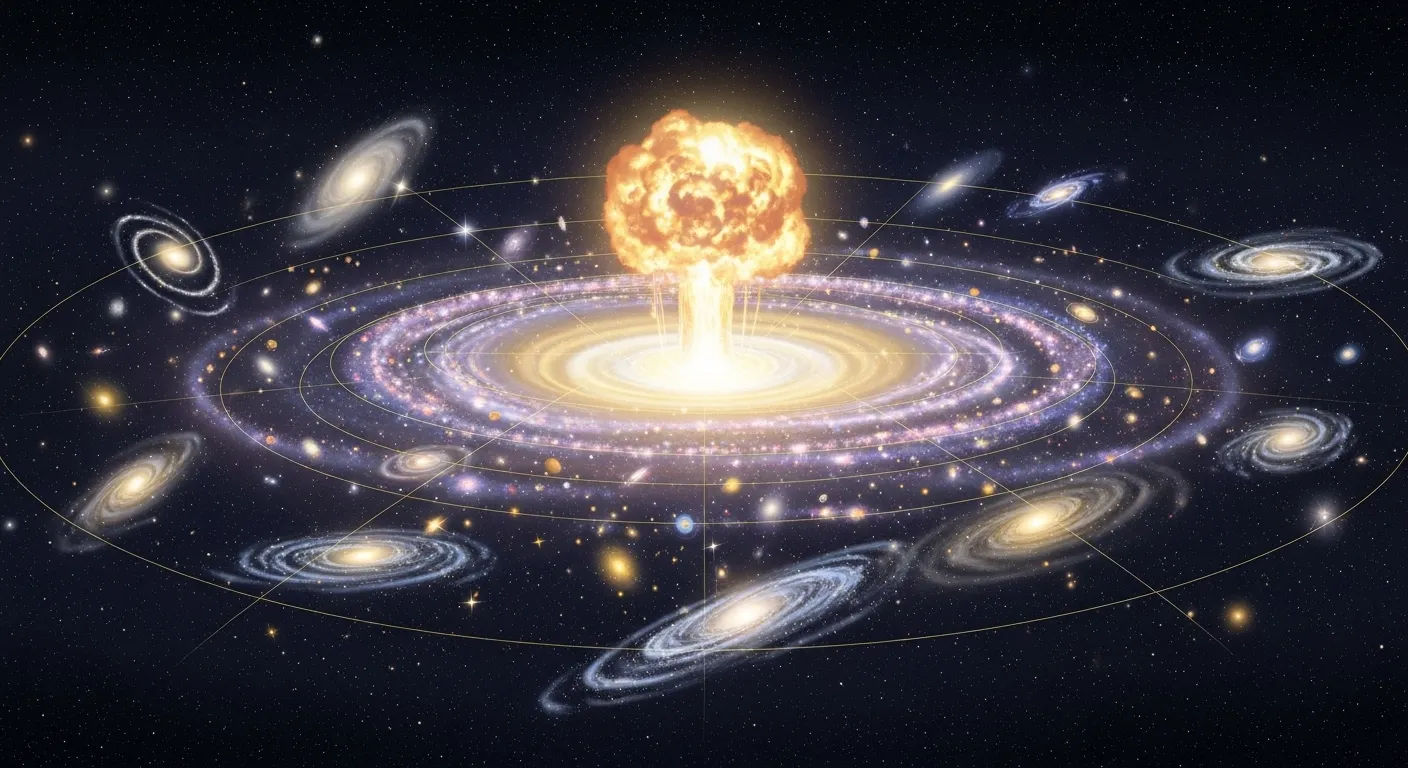
Rupert Sheldrake Science Delusions Exposed

- 1.
What Exactly Is the “Science Delusion” According to Rupert Sheldrake?
- 2.
Sheldrake’s Take on Morphic Fields and Why It Ruffles Feathers
- 3.
Is Morphic Resonance Scientifically Proven? Let’s Break It Down
- 4.
What Does Rupert Sheldrake Believe About Consciousness?
- 5.
Why Do Scientists Roll Their Eyes at Rupert Sheldrake?
- 6.
Could the “Science Delusion” Be Holding Back Real Discovery?
- 7.
Rupert Sheldrake vs. The “Ten Dogmas” of Modern Science
- 8.
Public Reception: From TED Bans to Podcast Stardom
- 9.
What Critics Get Wrong (and Right) About Sheldrake
- 10.
Where to Go From Here: Keeping the Conversation Alive
Table of Contents
Rupert Sheldrake Science Delusion
What Exactly Is the “Science Delusion” According to Rupert Sheldrake?
Yo, ever catch somebody spoutin' off that science has got every last answer locked down—and then you stop and think, dang, that sounds kinda full of itself? Well, Rupert Sheldrake sure as heck did. In his stirrin'-up-trouble book The Science Delusion (goes by Science Set Free over here in the U.S.), Sheldrake lays it out that today's science ain't nearly as chill and open as it likes to brag. He figures it's mired in these stiff, unbendin' dogmas—like reckonin' nature's nothin' but a big ol' machine or that consciousness is just some side effect from your brain firin' away. To him, treatin' these ideas like they're the final word is a straight-up delusion—basically intellectual cockiness hidin' behind a mask of bein' all neutral. He ain't turnin' his back on science; nah, he just wants it to shake off those blinders and dive back into askin' those off-the-wall, ballsy questions. After all, ain't gettin' curious the name of the game?
Sheldrake’s Take on Morphic Fields and Why It Ruffles Feathers
Alright, buckle up 'cause here's where it gets real juicy: Sheldrake’s morphic field theory. Picture this—nature's got itself a sorta group memory bank, where patterns, habits, and even shapes ain't just from DNA or plain physics, but from all the built-up routines of stuff that's happened before. Like, crystals "recall" how to shape up, rats worldwide pick up maze tricks quicker once a handful figure it out, and birds just instinctively know their migration routes like drivin' the interstate from New York to L.A. Sounds like somethin' out of a sci-fi flick? Could be. But Sheldrake swears it's somethin' you can test. Still, the big shots in science ain't havin' it. Haters label it junk science, while fans are like, "Dude, what if he's nailed it?" No matter what, the Rupert Sheldrake science delusion drama flares up every dang time morphic fields come up in convo.
Is Morphic Resonance Scientifically Proven? Let’s Break It Down
Quick take? Nah—not by the usual rules. Deeper dive? It's a messy tangle. Sheldrake says he's rounded up real-world proof—like them rat experiments or his wild "telephone telepathy" tests—but gettin' the same results elsewhere has been hit-or-miss, and gettin' the thumbs-up from fancy journals is slim pickins. The heart of the beef: morphic resonance don't jive with the straight-laced materialist setup we got goin'. That don't mean it's bogus, but it sure makes it persona non grata at the science shindig. So, while morphic resonance stays unbacked in the eyes of the establishment, it ain't 'cause nobody's tried. And shoot, history's packed with notions that got laughed outta the room—only to strut back in sportin' a Nobel Prize like a Super Bowl ring.
What Does Rupert Sheldrake Believe About Consciousness?
Sheldrake's got a real gripe with this idea that consciousness is all bottled up in your noggin. He don't buy that your mind's just trapped gray matter zappin' neurons left and right. Heck no—he's all in on consciousness bein' non-local, maybe threaded right into the universe's weave through them morphic fields. In his view, your thoughts ain't cranked out by your brain so much as dialed in by it—like tunin' a radio to catch the waves. Bonkers? You bet. But when you ponder how little we really get about our inner feels, maybe shuttin' down Sheldrake's vibes cold turkey is the true science delusion. Like he says: “The mind ain't stuck in the skull.” And c'mon, who ain't felt that on a midnight drive down Route 66 starin' at the sky?
Why Do Scientists Roll Their Eyes at Rupert Sheldrake?
Let's keep it real, y'all: Sheldrake gets under scientists' skin. Not 'cause he's clueless—he's rockin' a PhD in biochemistry from Cambridge, no less—but 'cause he pokes at the dogmas of materialism that hold up all the modern lab work. Callin' out your whole field as delusional? That ain't exactly buildin' bridges at the company picnic. Plus, his ideas dance around telepathy, seein' the future, and other far-out stuff that makes fundin' folks break out in a cold sweat. But here's the twist: Sheldrake ain't hatin' on science. He's hatin' on gettin' too comfy. He wants it to stay nosy, not turnin' to stone. And maybe—just maybe—that's why he catches so much shade. After all, nobody digs the fella who hollers that the emperor's rockin' no threads at the big parade.
Could the “Science Delusion” Be Holding Back Real Discovery?
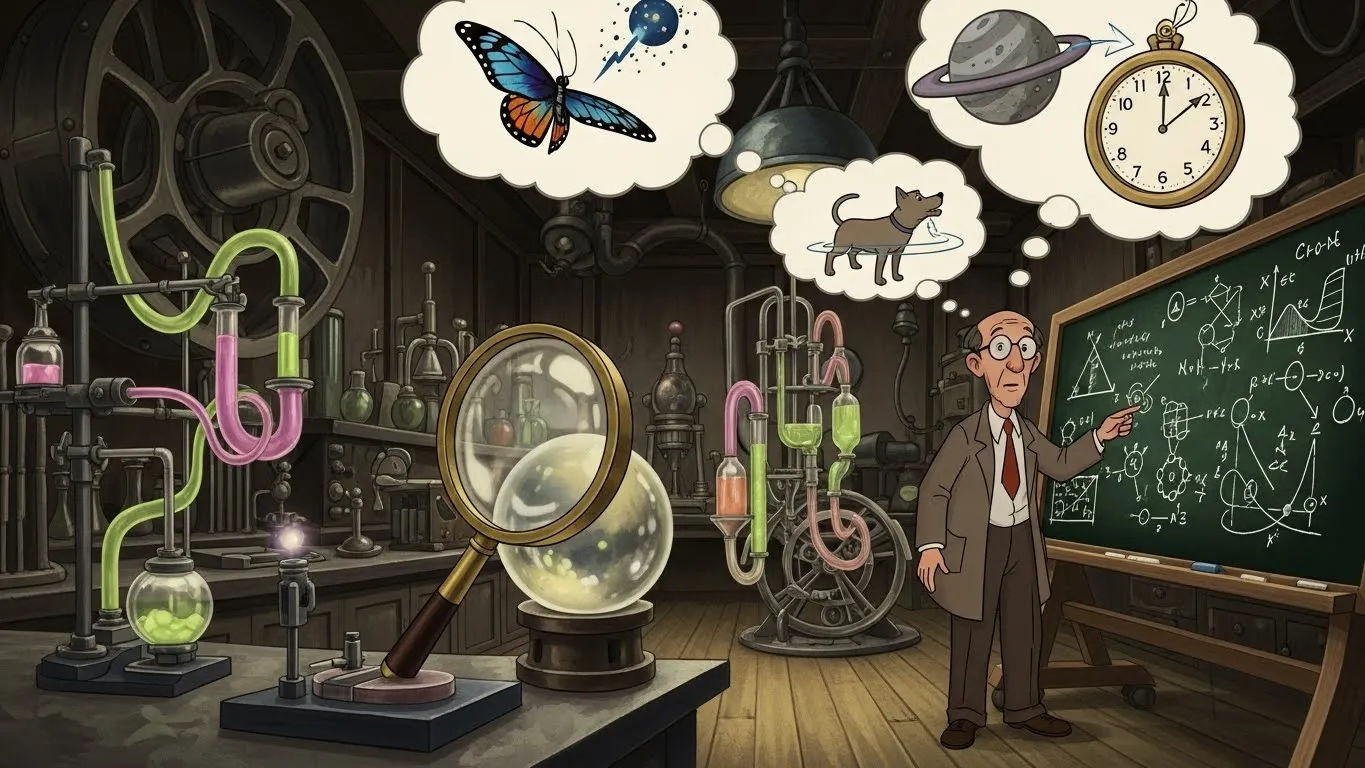
Think about it: if every scientist only poked at stuff that fits neat in today's textbooks, we'd still be swearin' the Earth's flat as a pancake, that lettin' blood fixes your fever, and that Pluto's a full-on planet (alright, that one's still arguin' fodder at backyard barbecues). Sheldrake's big pitch is that the science delusion—this blind trust in the status quo—keeps us from pokin' around the fringes. What if gravity ain't always steady? What if memories ain't filed away in your brain like old tax returns? What if the universe is straight-up alive and kickin'? These ain't just dreamy what-ifs; they're the kinda questions science used to chase before it got all scared of seemin' flaky. By brandin' Sheldrake a nutjob, are we guardin' the truth—or just our pride?
Rupert Sheldrake vs. The “Ten Dogmas” of Modern Science
In The Science Delusion, Sheldrake rounds up ten big beliefs that science treats like holy writ—stuff like “nature's got no purpose” or “minds are locked in heads.” He tags 'em as dogmas, not stone-cold facts. And dang, he's onto somethin': when you assume the universe is just dead junk bouncin' around willy-nilly, you're less likely to dig into weirdness that hints otherwise—like animals sensin' earthquakes or miracle healins. His takedown ain't fluffy mysticism; it's a holler for stayin' humble in the brain game. 'Cause let's face it: declarin' somethin' “impossible” just 'cause it don't fit your blueprint? That ain't science—that's science delusion with a big ol' capital D.
Public Reception: From TED Bans to Podcast Stardom
Remember that time TED yanked Sheldrake's 2013 talk for bein' “unscientific”? Man, that exploded like fireworks on the Fourth. But instead of fadin' into the sunset, Sheldrake blew up big time—poppin' up on podcasts, YouTube rabbit holes, and even chit-chat over burgers and fries. Turns out, people are cravin' science that feels real and relatable again. His mix of smarty-pants smarts and wide-open wonder hits home in a world where apps track your every move but can't explain why a sunset makes ya tear up. And while the big institutions might give him the stink eye, his crowd keeps swellin'. Why? 'Cause the Rupert Sheldrake science delusion story ain't just data—it's about lettin' your mind roam free.
What Critics Get Wrong (and Right) About Sheldrake
Let's play fair, folks: not every slam on Sheldrake is just defendin' the old guard. Some peeps legit fret that his concepts ain't testable—the holy grail of science. And yeah, a few of his tests are kinda sloppy. But here's what haters often skip: Sheldrake ain't pushin' for blind faith. He's beggin' for honest pokin' around. Slappin' “pseudoscience” on his stuff without even givin' it a fair shake? That's the exact delusion in science he's flag-wavin' about. On the flip side, Sheldrake could tighten up his methods a notch. It ain't black or white—it's both sides of the coin. Solid checks *and* wild ideas. Doubtin' *and* wonderin'. That's the sweet spot, y'all.
Where to Go From Here: Keeping the Conversation Alive
So, is Rupert Sheldrake science delusion or a game-changer? Heck, maybe a dash of each. One thing's clear as day: his stuff nudges us to reimagine what science could be—not some exclusive club of sure things, but a rowdy, meanderin' adventure. If you're itchin' to know more, kick off by grabbin' his books, catchin' his talks, or even runnin' his experiments in your own backyard (yep, you can try telepathy with your pup!). And while you're at it, check out what else is cookin' in the world of radical science over at Onomy Science, dive into more mind-bending reads in the Books section, or explore our curated list in Scientific Non-Fiction Books Top Picks. 'Cause sometimes, the most scientific move is keepin' an open mind.
Frequently Asked Questions
Is morphic resonance scientifically proven?
As of now, morphic resonance—Rupert Sheldrake’s theory that natural systems inherit collective memory through morphic fields—has not been scientifically proven according to mainstream standards. While Sheldrake has published experimental results (like rats learning mazes faster over time across the globe), these findings lack consistent replication and peer-reviewed validation. Most scientists consider it speculative, though Sheldrake maintains it’s a legitimate hypothesis worthy of further research within the broader conversation about the Rupert Sheldrake science delusion.
What does Rupert Sheldrake believe?
Rupert Sheldrake believes that contemporary science is trapped in a set of unexamined dogmas—what he calls the “science delusion.” He argues that nature is not purely mechanical, that consciousness extends beyond the brain, and that phenomena like telepathy or instinct may be explained through morphic fields. Far from rejecting science, Sheldrake advocates for a more open, imaginative, and empirically curious approach—one that doesn’t dismiss anomalies just because they don’t fit current models.
What is Sheldrake's morphic field theory?
Sheldrake's morphic field theory proposes that self-organizing systems—from atoms to animals—influence each other through invisible fields shaped by past similar systems. These “morphic fields” carry a kind of collective memory, making it easier for patterns to repeat over time and space. For example, once a crystal forms somewhere, it becomes slightly easier for the same crystal to form elsewhere. This theory, central to the Rupert Sheldrake science delusion critique, challenges materialist biology and physics by suggesting that form and behavior aren’t dictated by genes or laws alone, but by habit.
What is delusion in science?
In Sheldrake’s framework, the “delusion in science” refers to the mistaken belief that science already knows the fundamental truths about reality—like that matter is unconscious, the laws of nature are fixed, or the mind is confined to the brain. He argues this mindset stifles inquiry and turns scientific materialism into a quasi-religion. The Rupert Sheldrake science delusion isn’t about rejecting facts, but about questioning whether our current scientific worldview is as complete—or as open—as it claims to be.
References
- https://www.nature.com/articles/463296a
- https://www.scientificamerican.com/article/rupert-sheldrake-and-the-science-of-morphic-resonance/
- https://plato.stanford.edu/entries/scientific-realism/
- https://www.ted.com/talks/rupert_sheldrake_the_science_delusion