Peer Reviewed Academic Journal Articles Free Access
- 1.
What is a peer reviewed academic journal article?
- 2.
Where can I find peer reviewed academic journal articles?
- 3.
How to tell if an academic journal is peer-reviewed?
- 4.
Why does peer review even matter in the first place?
- 5.
What does the peer review process actually look like?
- 6.
How do peer reviewed academic journal articles differ from textbooks or blogs?
- 7.
Can you access peer reviewed academic journal articles for free?
- 8.
How do citations from peer reviewed academic journal articles boost your credibility?
- 9.
What are the most common pitfalls when using peer reviewed academic journal articles?
- 10.
How do peer reviewed academic journal articles shape modern research?
Table of Contents
peer reviewed academic journal articles
What is a peer reviewed academic journal article?
A peer reviewed academic journal article isn’t just some dude on Medium with a LinkedIn badge and a hot take about quantum physics. Nah. This is the gold standard—the Mount Rushmore of scholarly credibility. Imagine you write a paper on why squirrels are the true architects of urban ecosystems. You submit it to a respected journal. Then? It vanishes into a black box called “peer review.” Out of nowhere, three other scientists—total strangers, probably sipping coffee in a lab coat somewhere in Wisconsin—pull it apart. They check your methods, your math, your sources, your logic. Did you skip a step? Did you misquote Darwin? Did you accidentally claim squirrels invented the wheel? They’ll call you on it. If they’re convinced? Your article gets published. If not? Back to the drawing board, buddy. That’s the whole point: peer reviewed academic journal articles aren’t just written—they’re vetted, challenged, and polished until they shine like a freshly waxed ’67 Mustang.
Where can I find peer reviewed academic journal articles?
You think Google Scholar is your best friend? It’s more like your slightly over-caffeinated cousin who knows where the good stuff is hidden. Start there—Google Scholar is free, fast, and surprisingly good at sniffing out peer reviewed academic journal articles. But if you’re enrolled in a university? You’ve got a secret weapon: your library portal. Think JSTOR, ProQuest, ScienceDirect, EBSCOhost—these are the vaults where the real treasures live. Librarians? They’re the Gandalfs of academia. Ask ‘em. They’ll point you to databases you didn’t even know existed. And don’t sleep on PubMed for health stuff, arXiv for physics and math, or SSRN for social sciences. These aren’t just websites—they’re curated ecosystems where only the toughest, most rigorously tested peer reviewed academic journal articles survive. Pro tip: Use the “Advanced Search” feature. Filter by “Peer-Reviewed” or “Scholarly (Peer-Reviewed)”. Boom. No more sifting through TikTok theories disguised as science.
How to tell if an academic journal is peer-reviewed?
Here’s the trick: peer reviewed academic journal articles don’t just show up outta nowhere. The journal itself has to be legit. Look at the journal’s homepage—scroll down past the flashy graphics. If you see a line like “This journal employs a double-blind peer review process,” congratulations—you’ve struck gold. If not? Dig deeper. Check the “About This Journal” or “For Authors” section. Most legit journals spell it out. Another hack? Use Ulrichsweb.com. Type in the journal name. If it says “Refereed: Yes,” then yeah, it’s peer-reviewed. And here’s the kicker: peer reviewed academic journal articles usually have a clear structure—Abstract, Introduction, Methods, Results, Discussion, References. If it reads like a Reddit thread with footnotes? Probably not. Also, watch out for journals that ask you to pay to publish *before* they review your work. That’s a red flag bigger than a neon sign in a library. Real peer-reviewed journals don’t charge you to be judged—they charge you to be published, and only if you pass.
Why does peer review even matter in the first place?
Let’s be real: science is messy. People are biased. Data gets fudged. Without peer review, we’d be living in a world where someone publishes a paper claiming pineapple belongs on pizza… and then it’s cited by a congressman as “evidence.” Peer reviewed academic journal articles act like the scientific version of a fact-checker with a PhD. They filter out the junk, the hype, the fluff. They make sure your claim about “magnets healing depression” actually has data behind it. It’s not about being perfect—it’s about being *accountable*. Every citation you drop from a peer reviewed academic journal article is like putting your name on a bridge you helped design. If it collapses? You gotta own it. That’s the weight. That’s the power. That’s why your professor won’t accept your Wikipedia printout. They need you to build on foundations that have been stress-tested by the smartest minds in the room.
What does the peer review process actually look like?
Picture this: You send your manuscript to a journal. The editor doesn’t read it first—they send it to 2–4 experts in your exact niche. These folks are anonymous. They might be your rival. They might be your mentor. They might be someone who just woke up at 4 a.m. because their cat knocked over their coffee. They read your paper line by line. They ask: “Did you control for confounding variables?” “Is your sample size statistically meaningful?” “Why did you use a t-test and not ANOVA?” They’ll rip your methodology apart, suggest better citations, point out logical holes you didn’t even know existed. You get feedback. You revise. Maybe you resubmit. Maybe you get rejected. But if you make it? You’re not just published—you’re *validated*. That’s the magic. That’s why peer reviewed academic journal articles carry so much weight. They’re not written in a vacuum. They’re forged in fire. And yeah, it’s slow. It’s frustrating. But it’s the only system we’ve got that keeps science from turning into a game of telephone with a PhD.
How do peer reviewed academic journal articles differ from textbooks or blogs?
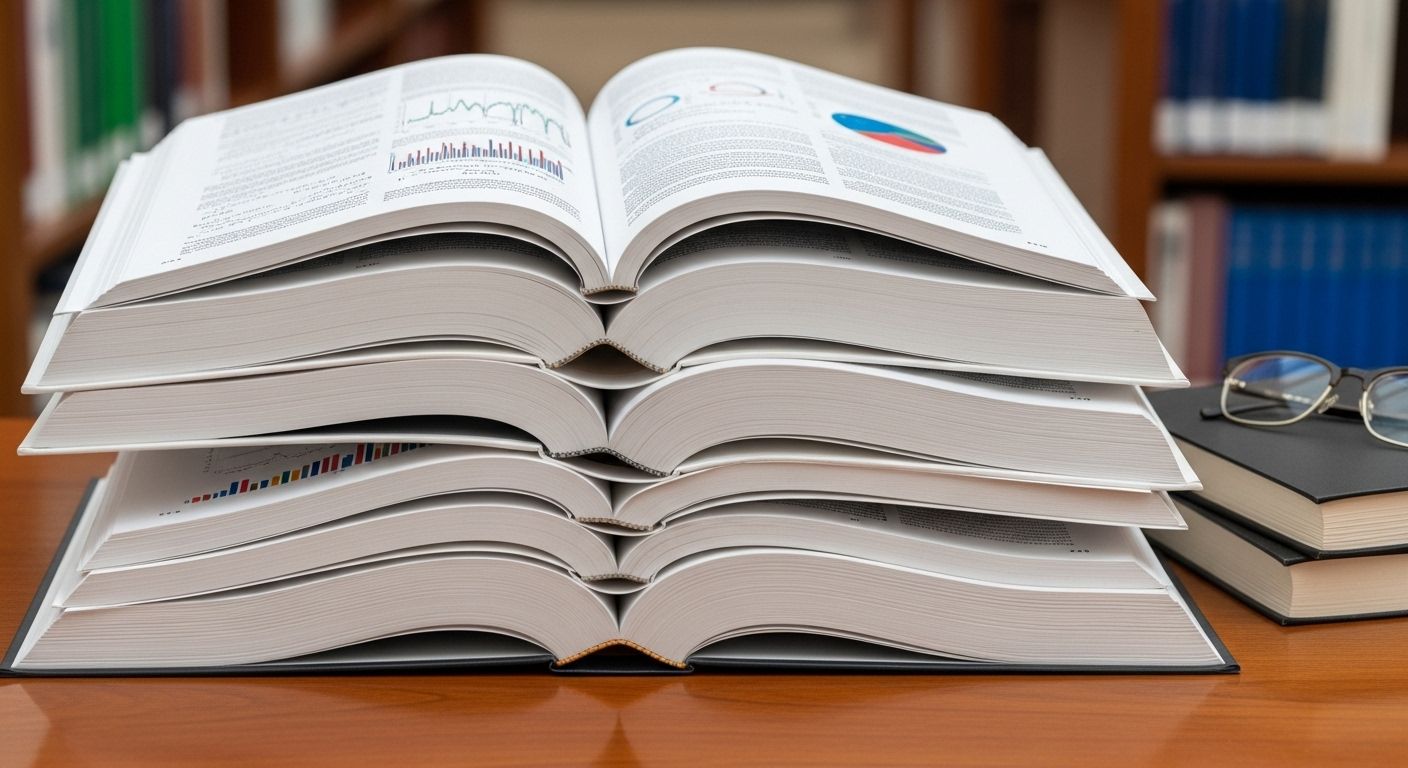
Textbooks? They’re the Wikipedia of academia—great for overview, terrible for cutting-edge. Blogs? They’re your uncle’s Facebook post about “how to cure cancer with kombucha.” Peer reviewed academic journal articles are the live feed from the lab, raw and real. Textbooks summarize. Blogs entertain. Journals *advance*. They’re the original research—the new data, the novel theory, the first time someone proved that blue light doesn’t kill your sleep… or maybe it does. And here’s the kicker: peer reviewed academic journal articles are *original*. They’re not summaries. They’re not opinions. They’re contributions to the ever-growing library of human knowledge. That’s why grad students live in them. That’s why Nobel laureates cite them. That’s why your thesis advisor glares at you when you use a blog as a source. It’s not snobbery—it’s survival. You can’t build a skyscraper on sand.
Can you access peer reviewed academic journal articles for free?
Here’s the good news: you don’t need to be rich to read the best science on Earth. Yeah, some journals charge $40 a pop. But plenty don’t. Look for open-access journals—PLOS ONE, BMC journals, Frontiers, MDPI. They’re free to read, free to download. Then there’s the dark web of academia: ResearchGate, Academia.edu, Sci-Hub. Use ‘em wisely. Some scholars upload their own papers. Others? Not so much. And don’t forget your university’s institutional repository. Many professors dump their final drafts there. Also, try Unpaywall—a browser extension that finds free legal versions of paywalled papers. If it says “Green OA” or “Publisher PDF,” you’re golden. The bottom line? Peer reviewed academic journal articles shouldn’t be locked behind a paywall if they’re funded by public grants. And increasingly? They’re not. You just gotta know where to look.
How do citations from peer reviewed academic journal articles boost your credibility?
Let’s say you’re writing a paper on climate change impacts in the Great Plains. You drop a line: “As Smith et al. (2023) demonstrated, soil moisture loss has accelerated by 37% since 2010.” Instant credibility. Why? Because Smith et al. didn’t just guess. They didn’t tweet it. They ran experiments. They controlled variables. They submitted to a journal. They survived peer review. That’s the difference between saying “I heard this on a podcast” and saying “Here’s the data, the method, the replication, the critique.” When you cite a peer reviewed academic journal article, you’re not just referencing a name—you’re invoking a system of trust. It’s like saying, “I didn’t make this up. A panel of experts vetted it. It passed the fire test.” That’s how you go from sounding like a guy at a BBQ to sounding like someone who belongs in the room where it happens.
What are the most common pitfalls when using peer reviewed academic journal articles?
Even the pros mess up. First? Citing the abstract like it’s the whole paper. Big mistake. Abstracts are summaries—sometimes misleading. Second? Using outdated sources. A 2005 paper on AI? Yeah, that’s pre-TikTok. Third? Confusing correlation with causation. Just because ice cream sales and shark attacks rise together doesn’t mean sharks love dessert. Fourth? Not checking the journal’s reputation. Some predatory journals slap “peer-reviewed” on their site and charge you $500 to publish your grandma’s recipe for banana bread. Fifth? Forgetting to read the *methods* section. That’s where the soul of the paper lives. If you skip it, you’re just copying words, not understanding truth. Always ask: “Could this be replicated?” If the answer’s “no,” then it’s not science—it’s storytelling. And remember: peer reviewed academic journal articles aren’t gospel. They’re evidence. Question them. Challenge them. That’s the whole point.
How do peer reviewed academic journal articles shape modern research?
Think of science as a giant, messy, beautiful quilt. Each peer reviewed academic journal article is a patch. One person stitches in a finding about CRISPR. Another adds a new model of neural plasticity. Another proves that caffeine improves memory retention in mice. These patches don’t just sit there—they connect. They contradict. They evolve. That’s how we went from “the Earth is flat” to landing rovers on Mars. The peer review system isn’t perfect. It’s slow. It’s biased sometimes. But it’s the only system we’ve got that filters noise from signal. And when you’re reading a peer reviewed academic journal article, you’re not just consuming info—you’re stepping into a centuries-old conversation between minds across time zones, languages, and disciplines. You’re holding a piece of the collective human brain. That’s powerful. That’s sacred. That’s why we do this.
How to cite peer reviewed academic journal articles like a pro
You got the article. Now how do you drop it in your paper without sounding like a robot? First, use a citation manager—Zotero, Mendeley, EndNote. They auto-format APA, MLA, Chicago. Second, always include the DOI (Digital Object Identifier). It’s the article’s permanent ID number. No DOI? Question the source. Third, don’t just say “Smith says…”—say “Smith et al. (2023) argue that…” and then *explain* how it connects to your argument. Fourth, cite recent work. Aim for the last 5–7 years unless it’s a foundational theory. Fifth, balance your sources. Don’t cite five papers from the same lab. Diversity of thought = stronger argument. And always, always link back to the original. Because peer reviewed academic journal articles aren’t just sources—they’re stepping stones. And you? You’re the next one building the bridge.
Want to dive deeper into the world of scholarly publishing? Start at the Onomy Science homepage, where we break down complex research into digestible, no-BS insights. Curious about how journals rank? Head over to our Journals category for curated deep dives. And if you’re hunting for the impact factors of top-tier publications, don’t miss our detailed breakdown on Journal Biological Conservation Impact Factor.
Frequently Asked Questions
What is a peer reviewed academic journal article?
A peer reviewed academic journal article is a scholarly paper that has been evaluated and approved by experts in the same field before publication. This rigorous evaluation ensures the research is valid, original, and methodologically sound. Unlike blogs or opinion pieces, peer reviewed academic journal articles undergo anonymous review by multiple scholars who challenge assumptions, verify data, and demand clarity—making them the gold standard in academic credibility.
Where can I find peer reviewed academic journal articles?
You can find peer reviewed academic journal articles through academic databases like JSTOR, PubMed, ScienceDirect, and Google Scholar. University libraries provide free access to these platforms. Open-access journals such as PLOS ONE and BMC journals also offer free, legal downloads. Always use filters labeled “peer-reviewed” or “scholarly” to ensure you’re accessing credible sources. Avoid random websites—stick to institutional or publisher-hosted platforms for authentic peer reviewed academic journal articles.
How to tell if an academic journal is peer-reviewed?
To confirm if a journal publishes peer reviewed academic journal articles, visit its official website and look for sections like “About This Journal,” “Author Guidelines,” or “Peer Review Policy.” If it explicitly states it uses peer review, it’s legit. You can also check Ulrichsweb.com—search the journal name and look for “Refereed: Yes.” Avoid journals that charge upfront fees without review. True peer reviewed academic journal articles come from journals that prioritize quality over profit.
Is a peer-reviewed journal article an academic source?
Yes, a peer reviewed academic journal article is one of the most trusted academic sources available. Unlike textbooks, encyclopedias, or news articles, it presents original research that has been scrutinized by experts. It includes citations, methodology, data analysis, and peer validation—all hallmarks of scholarly work. When you cite a peer reviewed academic journal article, you’re grounding your argument in evidence that has passed the highest standard of academic scrutiny.
References
- https://www.ncbi.nlm.nih.gov/pmc/articles/PMC4481775/
- https://www.apa.org/pubs/journals/amp
- https://www.sciencedirect.com/science/article/pii/S002210312030001X
- https://journals.plos.org/plosone/
- https://www.nature.com/nature/
- https://pubmed.ncbi.nlm.nih.gov/
- https://www.scholarlykitchen.sspnet.org/
- https://www.crossref.org/